вторник, 27 июня 2017 г.

Crackdown on Bitcoin Hits Businesses in Bali – Bitcoin News

Crackdown on Bitcoin Hits Businesses in Bali – Bitcoin News

1:21 PM


Having issued a stark warning to “all parties” against any use of “virtual currency”, Bank Indonesia has now joined forces with local police to prevent bitcoin transactions where they are most likely to take place – in Bali. The island, a popular holiday destination with tourists spending both fiat and crypto, has been targeted by authorities. Inspections of businesses accepting bitcoin are underway, according to Indonesian media and the crypto community in the country.


Also read: Luno Exchange Bank Account Frozen by Malaysian Tax Officials


Authorities on the Lookout for Illegal Transactions


Representatives of the Indonesian central bank and the national police force on the island have teamed up to investigate cases of cryptocurrency trading deemed illegal by authorities in Jakarta. They have already started collecting information about possible violations.


The crackdown in Bali comes after BI declared bitcoin an illegal form of payment in the country. Virtual currencies are prohibited in Indonesia, the financial institution stated. Rupiahs should be used for all payments and transactions that need money. The banning statement came with plans to swiftly implement the rules:


We are looking out for bitcoin transactions in Bali, particularly in tourist spots. We will take measures against non-rupiah transactions.


That announcement was made by the head of BI’s local branch Causa Iman Karana, who called the island “an alluring place for those who want to carry out illegal transactions”. Quoted by local press, Karana said in Denpasar that institutions had already warned people not to use virtual money “because there is no authority that regulates transactions”.


Businesses Can Be Closed, Owners Taken to Court


Members of the crypto community on the island quickly shared the news of the imminent crackdown in social media. Warnings were posted about checks expected to be carried out by bank officials and local law enforcement officers. Businesses could be suspended and owners taken to court, if they accept bitcoin payments. A villa has been reportedly closed down by inspectors. A foreign national had been used as a “mystery customer”… according to comments on the Bitcoins in Bali Facebook page.


Bali has been put in the spotlight after the announced prohibition of payments involving bitcoin. BI’s spokesman Agusman Zainal said that such transactions violated Law No. 7/2011 regulating currencies and their transactions in the country.


The ban has been further detailed in a dedicated bank regulation No. PBI: 19/12/PBI/2017 covering the implementation of financial technology. Under the current law, any payment in Indonesia should be made in the national currency, the Rupiah.


The central bank official also pointed to the risks associated with bitcoin transactions, noting that the cryptocurrency had no “official administrator”. Money laundering, terrorism and other criminal activities were added to the ubiquitous list of unwanted side effects.


Indonesians had been notified about the restrictions long before BI issued its ultimate warning to “not buy, sell, or trade virtual currency”. The assault on Bali shows that Jakarta means business. But what the crackdown means for the business, only time will show.


Do you think that the Indonesian government will succeed in preventing Bitcoin payments in Bali? Tell us in the comments section below.


Images courtesy of myBTCcoin.


Express yourself freely at Bitcoin.com’s user forums. We don’t censor on political grounds. Check forum.Bitcoin.com.


Mine Bitcoin & Litecoin Here

myBTCcoin


Original article and pictures take mybtccoin.com site

пятница, 23 июня 2017 г.

Cómo explican que va a explotar bitcoin los que afirman que es una burbuja

Cómo explican que va a explotar bitcoin los que afirman que es una burbuja
Wear 3080558 1920

Que Bitcoin esté viviendo o no una burbuja es todavía una incógnita. Es muy difícil predecir las burbujas cuando se está dentro de ellas y solo cuando han pasado unos años del pico se puede asegurar que el pasado era irracional. Pero desde luego todas las burbujas tienen sus gurús, aquellos que predecían correctamente el futuro, y ya hay expertos que aseguran que Bitcoin está viviendo una.


Ahora bien, ¿cómo será esta explosión de la burbuja que predicen estos expertos? No hay un consenso. Hay múltiples motivos por los que una burbuja puede estallar y más en el caso de una criptomoneda como Bitcoin, con cierta peculiaridades legales y técnicas que no tienen otros productos financieros.


Pánico y bajada


La primera forma en la que puede bajar Bitcoin es el mecanismo clásico por el que estallan todas las burbujas. Sin que haya un motivo concreto muchos inversores empiezan a recoger beneficios y entonces el Bitcoin empieza a bajar de precio. Esto llama a otros inversores a vender y realimentan la bajada. Al final hay un pánico vendedor y las caídas son bruscas (dentro de lo que permita el sistema).


Si una vez superado el pánico se crea un consenso en que Bitcoin realmente no tiene sentido, de que es un simple "juego" virtual y que no tenía sentido invertir en él, el precio no se recupera. Es decir, igual que existe un cierto consenso (o al menos el dinero de muchos inversores así lo piensa) de que Bitcoin es una inversión con sentido, si el consenso cambia y no hay un respaldo real por detrás, el precio se se puede desplomar de una forma definitiva y duradera.


Esto no ocurre cuando el activo financiero tiene un respaldo detrás. Por ejemplo, puede haber un pánico bursátil con las acciones de Zara, pero si cuando publica las cuentas trimestrales las ventas siguen potentes, la acción se recupera. Detrás de Bitcoin no hay nada y por tanto un pánico puede ser realmente una explosión de la burbuja.


¿Quién piensa que algo así puede suceder? El gran gurú de las burbujas, Robert J. Shiller, premio Nobel de Economía por sus trabajos en la valoración de activos, predijo con antelación tanto la burbuja punto com como la inmobiliaria de EEUU. Y él piensa que Bitcoin está viviendo una burbuja y que sus precios, antes o después, caerán.


Problemas regulatorios


Pero Bitcoin no es un activo financiero al estilo clásico. Puede tener otro tipo de fenómenos que empujen su precio a la baja. Y uno de ellos es una gran crisis regulatoria. ¿Qué significa esto? Pues que los Gobiernos del mundo consideren que hay que combatir a Bitcoin, ya que se puede usar para actividades delictivas y evadir así los controles de capitales.


Gold 3080552 1920

No es un riesgo leve, sino todo lo contrario. Algunos países, como China y Corea del Sur, están combatiendo activamente el uso de Bitcoin. De momento de una forma leve, prohibiendo las ICOs en el caso de China y prohibiendo su uso comercial en el caso de Corea del Sur, pero podría ir a más. De hecho hay países (eso sí, algo autoritarios) donde los Bitcoin están firmemente prohibidos.


Algunos expertos como Joseph Stiglitz, premio Nobel de Economía, proponen prohibir completamente Bitcoin mientras sea anónimo y las transacciones no tengan una explicación. Otros, como Mark Haefele, Chief Investment Officer de UBS Group AG, son también categóricos: no invierten en Bitcoin porque solo haría falta un atentado terrorista en EEUU, financiado a través de Bitcoin, para que los reguladores se lo tomen mucho más en serio.


Si Bitcoin vive una crisis regulatoria puede que toda la euforia que hemos vivido en los últimos meses se desvanezca y solo queden los verdaderos fanáticos de las divisas virtuales y grupúsculos anti-estado. Desde luego el riesgo de una crisis así es muy real.


Hackeado


Otro problema que puede destruir el valor del Bitcoin son los hackeos. No es la primera vez que un exchange es hackeado, de hecho el caso de Mt. Gox tiene ya varios años. La consecuencia de dicho hackeo fue clara, el valor del Bitcoin se desplomó. Pero el volumen todavía era pequeño y siguieron entrando nuevos inversores no escarmentados. A día de hoy un hackeo de un gran exchange puede ser más determinante y hundir el valor significativamente y de forma durarera. Y es que estos hackeos son bastante habituales, el último hace solo un mes.


Hand 3077533 1920

De todas formas existe un riesgo aún mayor que los hackeos a los exchange (que son como los bancos de Bitcoin). Y es que el algoritmo de Bitcoin, el diseño detrás del blockchain, no sea seguro. Está basado en SHA-256, que a día de hoy se considera seguro, pero una vulnerabilidad en este algoritmo de hash podría hacer que todo el valor se esfumara. Un fallo de este estilo seguro que hundiría el valor de una forma definitiva, aunque pudiera solucionarse con un cambio ágil del algoritmo (cosa que no es ni mucho menos sencilla).


Problemas técnicos de escalabilidad


Bitcoin tiene otros problemas, esta vez técnicos. Y es que el crecimiento está demostrando que tiene problemas de escalabilidad. Por un lado las comisiones en las transacciones a los precios actuales son una barbaridad, tanto que una conferencia de Bitcoin ha decidido dejar de aceptar los propios Bitcoin como medio de pago.


Otro debate es el del consumo energético para mantener la red de Bitcoin. Y aunque normalmente se habla muy alegremente del consumo energético, lo cierto es que el coste energético por transacción es significativamente superior al de otras opciones más tradiciones como el pago con tarjeta de crédito.


Estas limitaciones podrían reducir el uso de Bitcoin y hacer que su precio se redujera, incluso para iniciar un desplome de la supuesta burbuja. De hecho hay críticas muy bien fundamentadas sobre las implicaciones de estos problemas técnicos.


Otros motivos por los que podría desplomarse Bitcoin


Aunque lo repasado anteriormente son las causas fundamentales por las que podría hundirse el valor de Bitcoin lo cierto es que hay algunas otras, aunque menos potentes. La primera es que surja un fork que haga que Bitcoin se convierta en minoritario (por ejemplo para eliminar o corregir los problemas técnicos). Lo cierto es que es improbable, ya ha habido algunos intentos que no han cuajado. Y aunque triunfara, tampoco se puede decir que Bitcoin se ha hundido si surge un Bitcoin B que sigue funcionando.


Por otro lado el surgimiento de derivados financieros para invertir en Bitcoin ha sido señalado por algunos como una herramienta que puede hundir los precios de Bitcoin, ya que apostar a la baja es más sencillo. Aquí hay mucha polémica ya que no está del todo claro que los productos derivados puedan afectar al valor del subyacente. Mi opinión personal es que no, no pueden afectar a su valor. Y menos en el caso del Bitcoin, donde hay manipulaciones mucho más grotescas, tanto por los exchange como por inversores individuales.


También te recomendamos


Stiglitz, Krugman y Shiller: los Nobel de Economía que dicen que Bitcoin es una burbuja


-

La noticia Cómo explican que va a explotar bitcoin los que afirman que es una burbuja fue publicada originalmente en Xataka por Alejandro Nieto .


Original article and pictures take jccomputerservices.blogspot.com site

четверг, 22 июня 2017 г.

Coinbase bug let Overstock users pay in Bitcoin Cash, get refunds in Bitcoin

Coinbase bug let Overstock users pay in Bitcoin Cash, get refunds in Bitcoin
bitcoin, bitcoin cash, overstock, coinbase

It turns out that newbie cryptocurrency enthusiasts are not the only ones struggling to tell Bitcoin apart from its fork, Bitcoin Cash.


Online retailer Overstock.com, which has a wide selection of goods from furniture to luxury watches, suffered from a nasty technical flaw that allowed customers to pay with both Bitcoin and Bitcoin Cash – despite the fact that the latter currency was valued at a significantly lower price.


The bug essentially made it possible to successfully pay the required amount of BTC in BCH, but without adjusting the price according to the value of the latter. This meant that you could get any item at a 70-plus-percent “discount.” At the time of writing, Bitcoin and Bitcoin Cash stand at $14,524 and $2,675, respectively.


The worst part was that, once users had requested a refund, the retailer would proceed to pay them back in the original Bitcoin value – a glitch that could have easily incurred millions of losses.


The technical shortcoming was first reported by KrebsOnSecurity, where the flaw has been documented in more detail. Reporter Brian Krebs notes he discovered the issue following a notice from a concerned Overstock customer.


According to the post, all it took to pull off this “trick” was paying for your item of choice with BCH instead of BTC. As long as the requested BTC fee was the same, the payment would go through as successful.


“Logging into Coinbase, I took the [B]itcoin address and pasted that into the “pay to:” field, and then told Coinbase to send 0.00475574 in [B]itcoin [C]ash instead of [B]itcoin,” Krebs wrote. “The site responded that the payment was complete. Within a few seconds I received an email from Overstock congratulating me on my purchase and stating that the items would be shipped shortly.”


“I had just made a $78 purchase by sending approximately USD $12 worth of [B]itcoin [C]ash,” Krebs continued.


As Krebs himself points out, any customer practically had the the ability to exploit this bug to make “ridiculous sums” of Bitcoin in a very short window of time.


“Let’s say I purchased one of the more expensive items for sale on Overstock, such as this $100,000, 3-carat platinum diamond ring. I then pay for it in Bitcoin cash, using an amount equivalent to approximately 1 bitcoin ($~15,000),” Krebs said. “Then I simply cancel my order, and Overstock/Coinbase sends me almost $100,000 in bitcoin, netting me a tidy $85,000 profit. Rinse, wash, repeat.”


For background, Overstock partnered with cryptocurrency exchange desk Coinbase back in 2014 so the retailer could offer its customers the option to pay in Bitcoin and other cryptocurrencies.


According to Overstock, the issue resulted from a faulty payment integration provided by Coinbase. Coinbase has since shifted the blame back to Overstock, saying that “the merchant partner improperly using the return values in our merchant integration API.”


The bug purportedly existed for “approximately three weeks,” according to a statement from Coinbase. Fortunately for Overstock, it has since been fixed.


Original article and pictures take cdn0.tnwcdn.com site

среда, 21 июня 2017 г.

CLAIM CRYPTOCURRENCY !FREE BITCOIN FAUCET!!! 100% LEGIT!! -VIDEO

CLAIM CRYPTOCURRENCY !FREE BITCOIN FAUCET!!! 100% LEGIT!! -VIDEO


CLAIM FREE BITCOIN HOURLY DIRECT TO COINSPH!!! Minimum Withdraw 0.001 BTC!!! Note: This is not mining!!! This is faucet!! Which mean NO INVESTMENT!!! For payment Proof Chat me!! Ok! Link…


Original article and pictures take worldcontentsolutions.com site

понедельник, 19 июня 2017 г.

Chinese Bitcoin Miners Largely Unaffected by Volatility and Regulation

Chinese Bitcoin Miners Largely Unaffected by Volatility and Regulation

China has proven to be one of the most profitable locations for Bitcoin mining, even with the increased cost of electricity and reduced rate of mining. This would mean that if the dominant cryptocurrency were to fall by half its value, miners in China would still turn a profit.


Balancing Electricity Costs


The price of bitcoin is currently trading near the $14,000 mark but was valued at $6,900 as recently as mid-November 2017, less than two months before the date of writing this article. As long as Bitcoin’s value is above $6,925, Chinese miners turn a profit.


This benchmark is associated with the highest-possible electricity rate in China, inferring that mining is profitable under any electricity regime. Should the electricity be reduced to the wholesale price, the breakeven point would be $4,800. Were it to be further lowered to the discounted rate, the points at which profits are earned would lie as low as $3,900.


Approached from another angle, profits range up to $10,100 (72 percent) per bitcoin at the discounted electrical rate, up to $9,200 (65 percent) per bitcoin at the wholesale rate, and up to $7,100 (50%) at the industrial rate.


Thus, it is no wonder that miners from all over the world have set up Bitcoin mining operations in the country, despite its crackdown and impending mining regulation.


The Chinese government has expressed concern at the amount of electricity used by bitcoin miners, especially from hydropower stations which were intended to deliver low-cost or free electricity to low-income rural areas in the country.


Bitcoin mining is done through the solving of complex mathematical equations, which have the purpose of validating transactions on the blockchain. At the same time, new blocks are created, which is how freshly “mined” bitcoins (or parts thereof) are received by miners.


Where it was once possible to mine for bitcoins on an ordinary computer, as the digital currency has progressed through its main developmental stages, mining has become increasingly difficult. As a result, it is now necessary to use industrial-grade specially developed bitcoin mining machines.


Missed the morning release of the Antminer S9 #BitcoinCash #Bitcoin miner today? We've got good news for you: we'll be releasing the same batch today at 5PM (9 Jan, GMT+8) here: https://t.co/IvWsYMLLsJ
Order while the batch lasts! pic.twitter.com/nFwSx2grk6

— BITMAIN (@BITMAINtech) January 9, 2018


Naturally, the process is highly energy-intensive, with heat being produced as a by-product. Many miners have spoken of placing machines in their basements to heat their homes.


Consequently, China has made moves to clamp down on Bitcoin mining with the aim to eradicate it country-wide. Although highly inconvenient, miners in China saw this decision coming after the first Chinese crackdown on the cryptocurrency. In preparation for what was widely deemed inevitable, many miners have long since made arrangements to transfer their operations elsewhere.


Although China represents the vast majority of the world’s bitcoin mining industry, the consensus is that a mining crackdown in the country would not have a lasting effect on the industry or the cryptocurrency as a whole.


The post Chinese Bitcoin Miners Largely Unaffected by Volatility and Regulation appeared first on BTCMANAGER.


Original article and pictures take decentral.market site

пятница, 16 июня 2017 г.

Chain of Wealth

Chain of Wealth

So, You Want to Buy Bitcoin?


First off, welcome to the world of Cryptocurrency!


You’re probably here because you’ve heard about the recent gains your friends have been making in the cryptosphere and want to get in on the action.


I, myself have friends who have earned hundreds of thousands of dollars because they invested at the right time.


But I totally get it: all the crypto-talk has your head spinning and you’re not sure who you can trust and you don’t want to lose thousands of dollars. Well, you’ve come to the right place, Chain of Wealth is an educational platform that aims to empower our audience. We run a successful Podcast & Blog and interview some of the most inspiring people in the world.


In this guide we will go through all the things you should do when you buy Bitcoin or any other cryptocurrency.


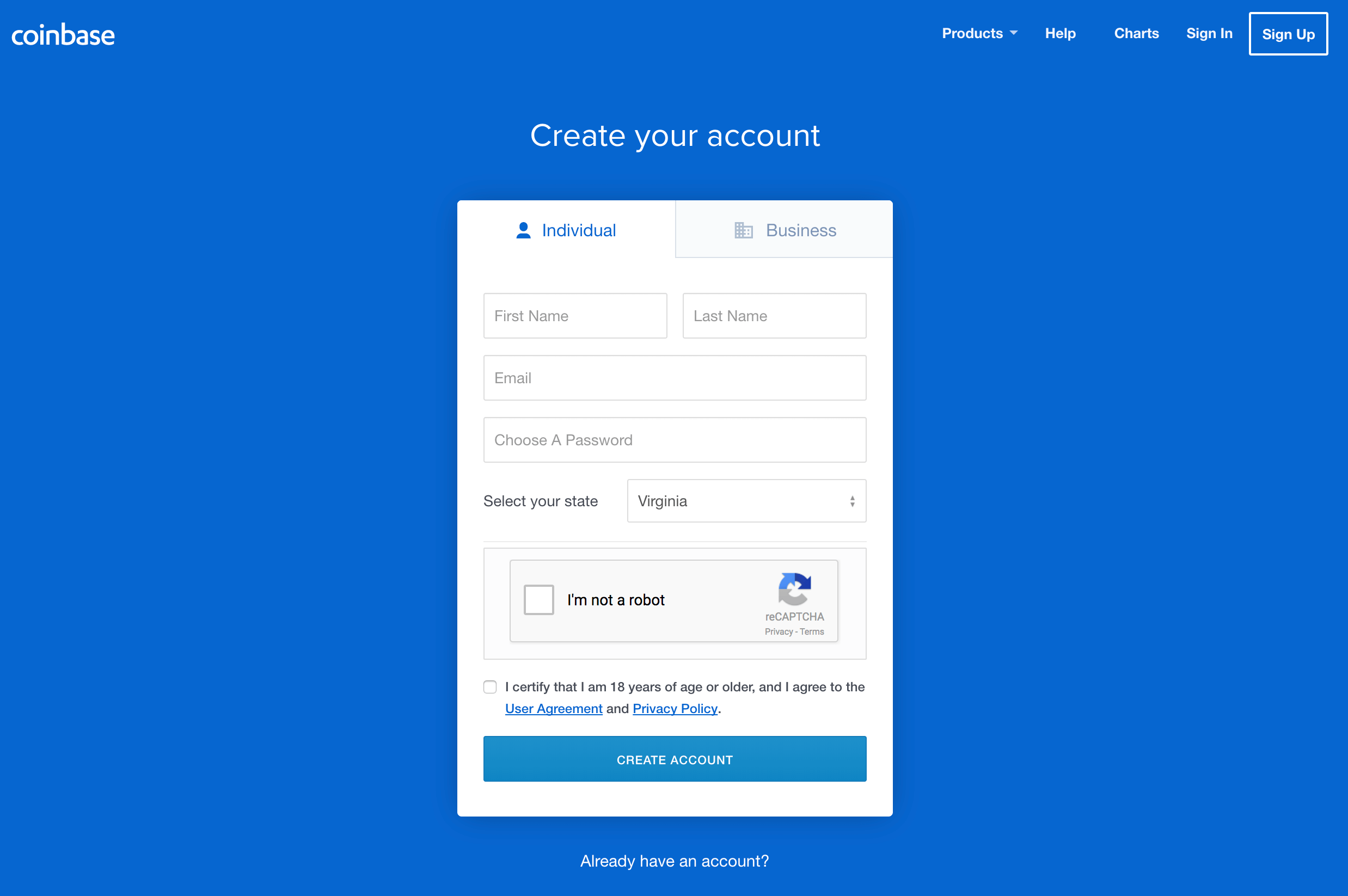
If you’d like to skip ahead you can register an account on Coinbase (do it now, I’ll wait).


That link will get you $10 for free of Bitcoin if you spend $100 or more.


If you take one thing away from this guide I want it to be that you need to understand what you are buying before diving in.


You also need to realize that the cryptocurrency markets are extremely volatile and you stand to lose everything you invest. Therefore, I recommend that you only invest money you can afford to lose.


A really good friend of mine who has a masters in finance recently contributed a guest post to Chain of Wealth and he dives into exactly what is cryptocurrency and how blockchain works.


It’s a fantastic article and I won’t dive into the specifics in this post, but I do recommend you take a look at it if you’d like some further reading.


OK, you’re ready to dive in!


The way you buy crypto is on an exchange. Think of an exchange as a stock exchange, where buyers meet sellers. They agree on a certain price and a transaction takes place.


This is no different in the world of Cryptocurrencies.


There are many exchanges out there and as time has progressed some exchanges have become more trustworthy than others.


I recommend Coinbase as your first port of entry to the market. Here you can buy Bitcoin, Ethereum & Litecoin.


Coinbase has handled $50 billion in transactions, is supported in 32 countries and has served over 10 million customers.


Also, Coinbase has an insurance policy to cover you in case of a breach. They also keep 98% of the coins in offline storage which makes it very safe (see more on safety in our cryptoschool mailing list).


In short, it’s the easiest and safest way to get your feet wet.


In case you need the link again, you can sign up for Coinbase by visiting their website. (Use that link to get $10 of Bitcoin after spending $100!)


Once you’ve verified your email I strongly recommend enabling 2-factor authentication on your account.


This is to protect you from unauthorized access and I strongly advise you to take this security measure.


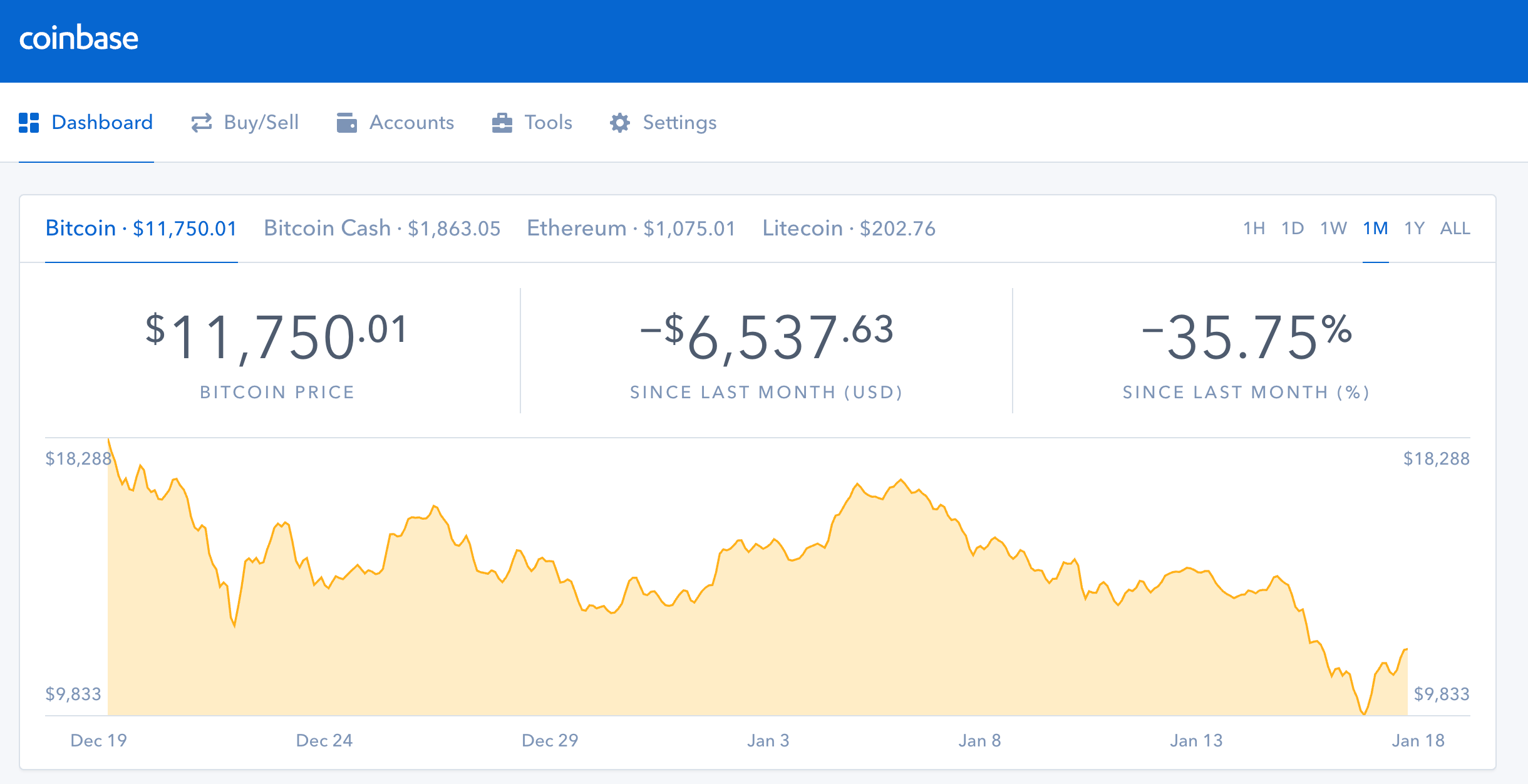
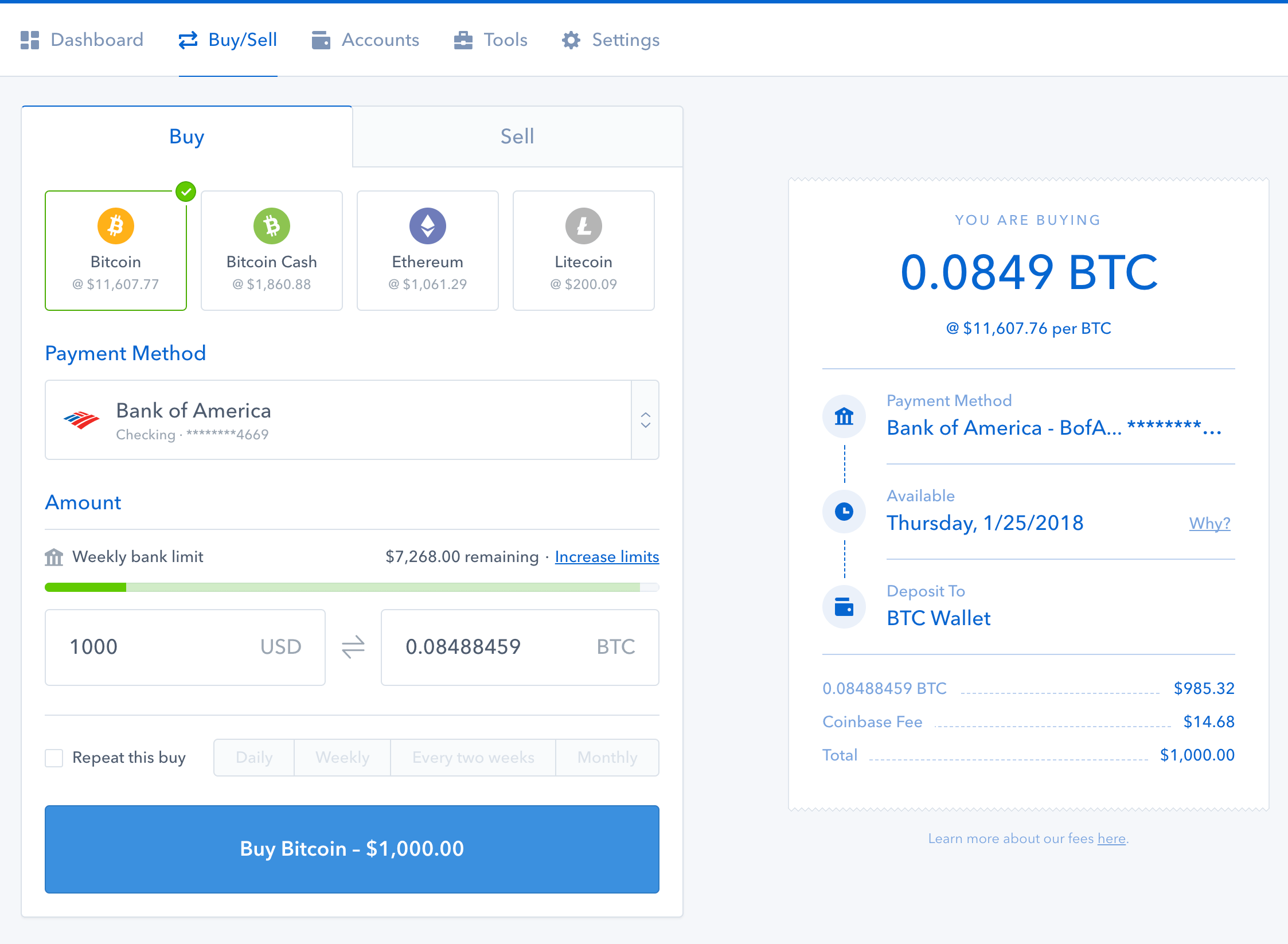
once you’re logged in, your dashboard will show the current prices of Bitcoin, Ethereum and Litecoin as follows:


The next step will be to fund your account.


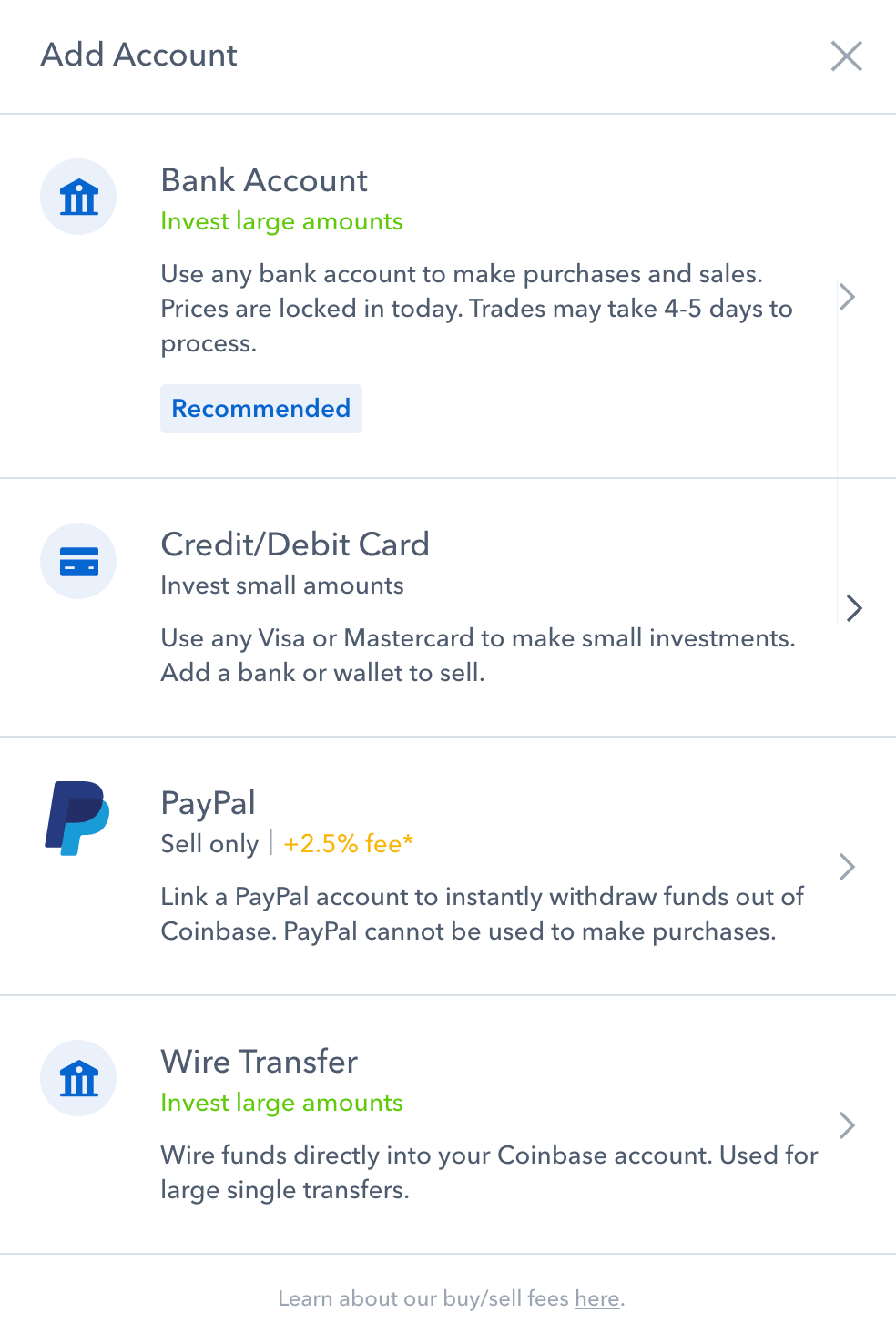
Coinbase makes it really simple to fund your account, it accepts bank transfers, Credit & Debit Cards, Paypal & Wire Transfers.


Personally, I have funded my account with both bank transfers and credit cards, however it’s up to you to decide what’s your preferred method to fund it.


You will save money on fees if you wait for a bank transfer to go through, however if you need to make an urgent trade, a credit cards might make more sense.


Credit card funding is instant and bank transfers take 4-5 days.


I use coins in quotation marks because you don’t need to buy an entire coin.


You can buy part of a coin.


One misconception people have is they think they have to buy an entire coin- you can buy part of a coin and it still has value.


As an example, if I wanted to buy $1,000 worth of Bitcoin, I would simply enter the dollar value of Bitcoin I wish to purchase.


Coinbase will then automatically calculate the Bitcoin value that you are purchasing.


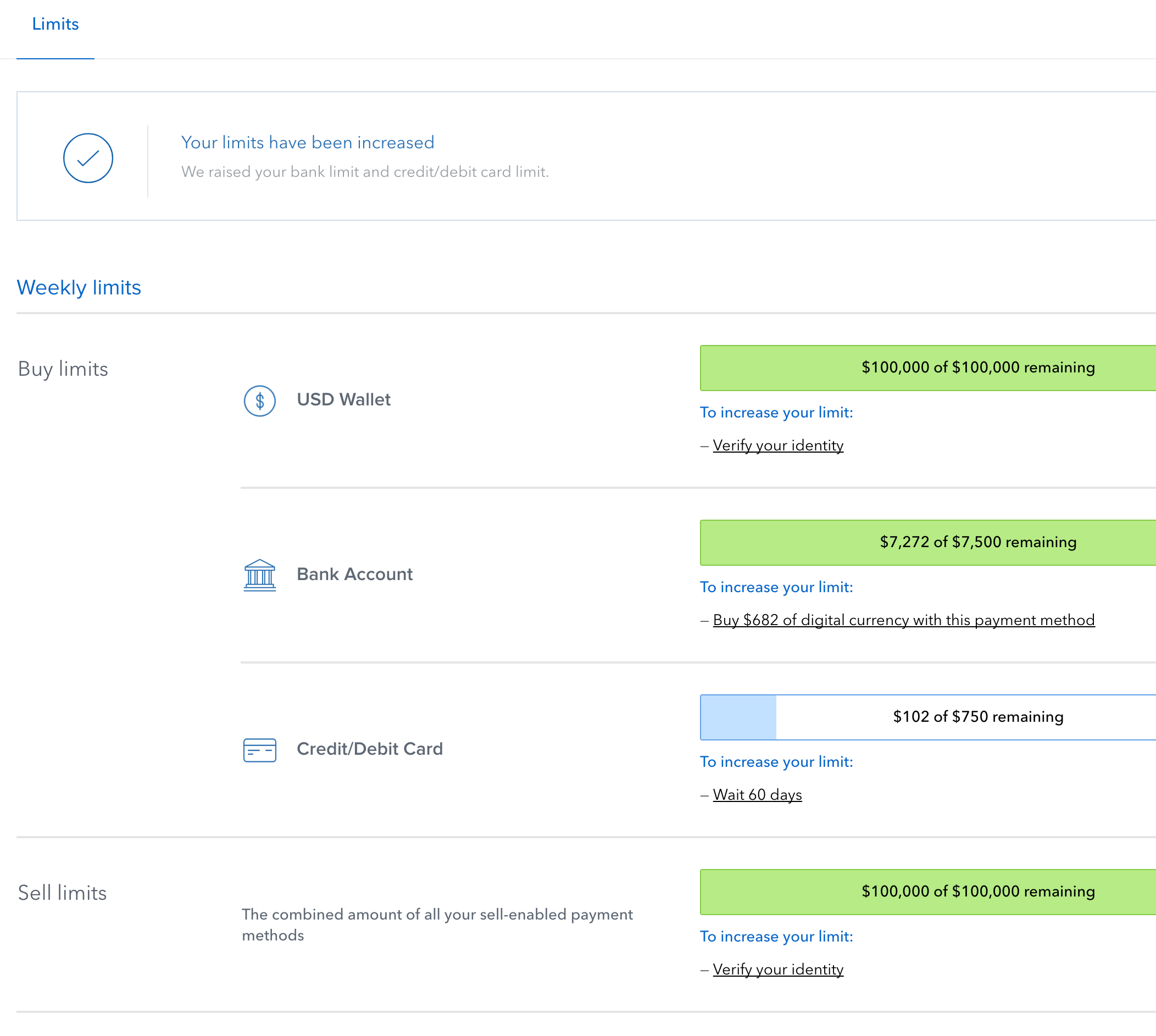
You will notice that there is a weekly limit on how much cryptocurrency you can buy.


This can be increased by verifying your identity with Coinbase and also helps securing your account. This is done to prevent fraudulent transactions as forces you to build up “trust” with Coinbase.


If you hit Increase limits, you then have some options available to you.


Pretty simple right?


This guide covered the basics on Bitcoin and how to buy it.


If you want to buy some of the other cryptocurrencies such as Ripple, you will need to transfer your Bitcoin to another exchange to do so.


If you’re looking for other critical basics such as what is a cryptowallet and how you can use it to secure your cryptocurrency (which I highly recommend doing). Then I suggest you-


Were you able to buy Bitcoin?


Let me know in the comment section below?


Original article and pictures take chainofwealth.com site

четверг, 15 июня 2017 г.

CFTC Files Fraud Charges Against Another Bitcoin Scam

CFTC Files Fraud Charges Against Another Bitcoin Scam

A New York resident who purportedly operated a bitcoin trading firm was hit with criminal charges in the second enforcement action filed today by the CFTC against cryptocurrency related fraud cases.


The US Commodity Futures Trading Commission has charged Staten Island-based CabbageTech, doing business as Coin Drop Markets (CDM), and its principal, Patrick McDonnell, with running a fraudulent scheme that involved buying and trading the cryptocurrencies Bitcoin and Litecoin.


The CFTC alleges that beginning in January 2017and continuing through to the present the defendants conspired to defraud investors by enticing them to send their money to CabbageTech, in exchange for trading recommendations and digital coins purchases under McDonnell’s direction.


Nearly all of the pool money was lost, according to the complaint that accuses the defendants of fraud, misappropriation, registration violations and issuing false statements.


In connection with the promotion of their pool, McDonnell made a series of materially false claims to lure investors interested in ‎digital coins trading. The claim was made that pool participants could get extraordinary investment returns, up to 300% in less than a week.


Instead ‎of using the investors’ monies in trading, the fraudsters ‎misappropriated all of the participants’ funds, then removed the website and social media materials and ceased communicating with customers.


Separately on Friday, the CFTC accused a Colorado businessman and his UK-registered company of violating trading regulations and defrauding at least 600 customers of more than $1.1 million.


As also ‎alleged, he used some new investors’ funds to pay back other investors in a Ponzi-‎like fashion, so that they would invest or refer additional money, thereby ‎allowing the scheme to continue for a longer period of time. ‎


Original article and pictures take bitnewsbot.b-cdn.net site